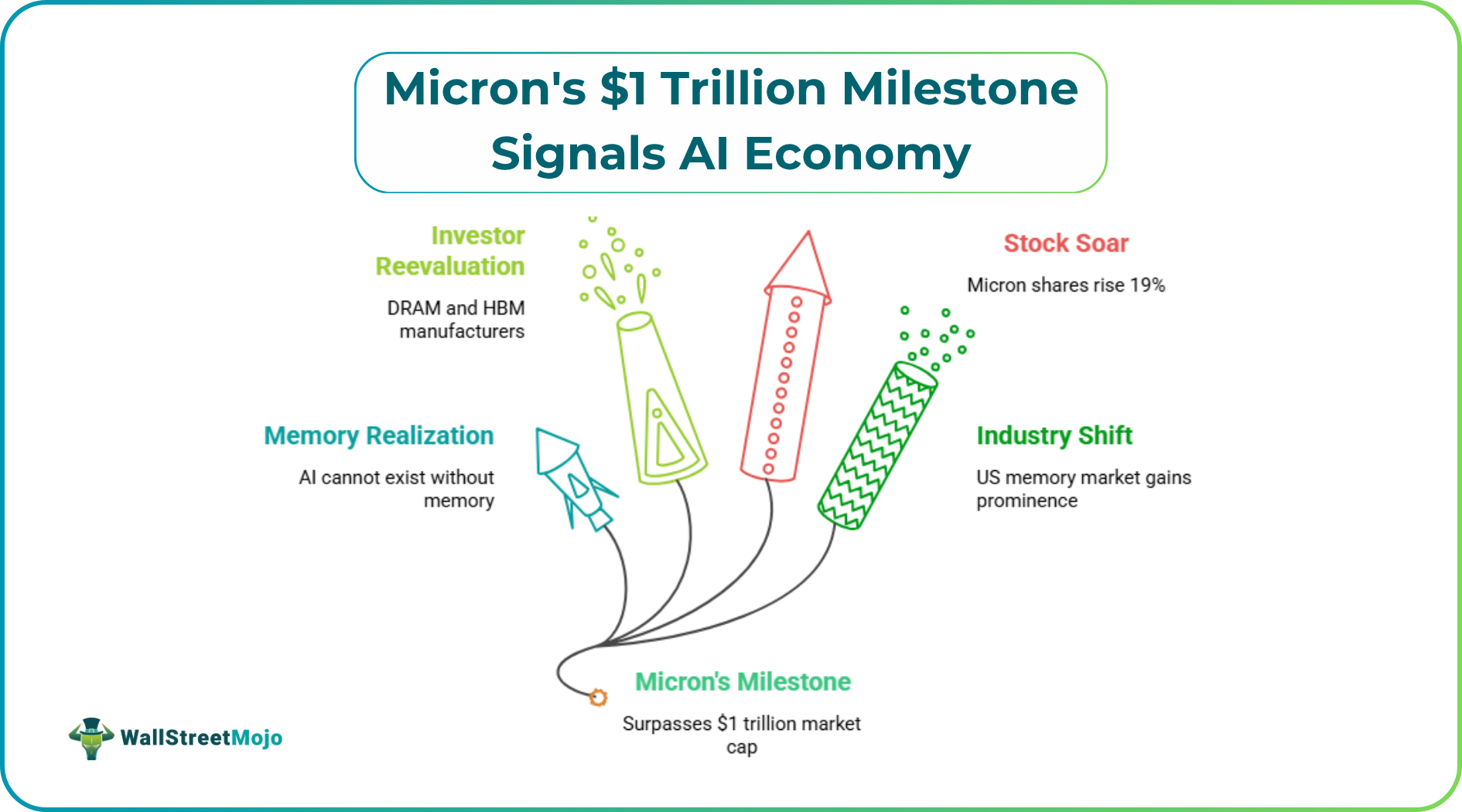
Micron's ascent to $1 trillion market capitalization underscores a fundamental repricing of memory semiconductors as AI infrastructure commoditizes demand at scale. The thesis reflects structural supply-demand imbalance: HBM (high-bandwidth memory) and DRAM production cannot keep pace with data center buildouts, elevating memory from commodity pricing into margin-protected strategic asset status.
The market is internalizing that AI workloads require exponentially higher memory bandwidth and capacity than traditional compute, creating a multi-year capex cycle for semiconductor manufacturers. This elevation benefits not only Micron but upstream suppliers and adjacent semiconductor peers, as memory bottlenecks force customers to accept higher component costs. Supply constraints validate pricing power that previously did not exist.
Competitive dynamics favor consolidated players with DRAM and NAND scale. Regional supply chain diversification trends (US, South Korea geopolitical hedge) further support capacity utilization and pricing discipline. The AI boom transforms memory from cyclical commodity into secular growth narrative—a rare repricing for a mature segment.
Sector implication: Technology hardware and semiconductor segments face rotation into profitability beneficiaries rather than sales-growth stories. Foundational memory manufacturers capture outsized margin expansion before AI scaling normalizes.